By Edward Anyoli
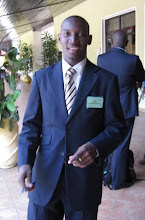
FOUR city pastors were yesterday charged with conspiracy to injure the reputation of their colleague, Pastor Robert Kayanja of Rubaga Miracle Centre.
Those charged are Moses Solomon Male of Arising for Christ Church; Dr. Martin Sempa of Makerere Community Church; Michael David Kyazze of Omega Healing Centre; Bob Robert Kayira of Omega Healing Centre and Anita Deborah Kyomuhendo, a State House employee.
The accused appeared before Buganda Road Court before Grade One Magistrate John Wekesa, but denied the charges. Court also issued criminal summons for David Mukalazi for failing appear in court to answer to the charge.
They were later granted a cash bail of sh200, 000 each and their sureties were to execute a non-cash bail of sh1m. The pastors were represented by Paul Rutisya, Isaac Walukagga and Edward Akankwasa.
Prosecution, led by Stephen Asaba, alleges that the four pastors, between December 2008 and 2009 at various places within Kampala, conspired to cause injury to the personality, reputation and trade of Pastor Kayanja.
Asaba did not oppose their bail application, but asked court to impose stringent conditions that would compel them to attend court whenever they are required.
The accused, according to prosecution, conspired to injure Kayanja’s reputation when they alleged that he was engaged in homosexual practices.
Pastors Kyazze and Kaiira are facing other charges at Mwanga II Court in which they are accused of entering Kayanja’s premises at Rubaga Miracle Centre with intent to intimidate and insult him. The offence, prosecution added, was committed on April 17, 2009.
Charges against two city advocates, Henry Ddungu and David Kaggwa, who had earlier been accused of conspiring with the pastors, were dropped due to lack of evidence.
Wednesday, January 5, 2011

Monday, January 3, 2011
Uganda LGBT Community Gets Landmark Court Win Against Rollingstone Tabloid
The Civil Society Coalition on Human Rights and Constitutional Law in
Uganda warmly welcomes and applauds today’s decision by High Court
judge, Justice V.F. Kibuuka Musoke in the case of Kasha Jacqueline, Pepe Onziema & David Kato v. Giles Muhame and The Rolling Stone Publications Ltd. Through its members Kasha Jacqueline, David Kato and Patience Onziema, the Coalition filed a complaint in the High Court against the Rolling Stone.
The Court issued an interim order restraining the editors of the newspaper from any further publication of information about anyone alleged to be gay, lesbian, bisexual or transgender until the case could be finally determined.
After an initial postponement, the merits of the case were heard on 23
November, 2010. The final ruling was read today, 3rd January 2011.
In considering whether the Rolling Stone’s publication of alleged homosexuals’ names, addresses and preferred social hang-outs constituted a violation of the applicant’s constitutional rights, the Court, ruled that:
1) The motion is not about homosexuality per se, but ‘...it is about
fundamental rights and freedoms,’ in particular about whether ‘the
publication infringed the rights of the applicants or threatened to do
so’.
2) The jurisdiction of Article 50 (1) of the Constitution is dual in nature, in that it extends not just to any person ‘whose fundamental rights or other rights or freedoms have been infringed in the first place,’ but also to ‘persons whose fundamental rights or other rights or freedoms are threatened to be infringed.’
3) Inciting people to hang homosexuals is an attack on the right to dignity of those thus threatened: ‘the call to hang gays in dozens tends to tremendously threaten their right to human dignity.’
4) Homosexuals are as entitled to the right to privacy as any other citizens. Against the ‘objective test’, ‘the exposure of the identities of the persons and homes of the applicants for the purposes of fighting gayism and the activities of gays...threaten the rights of the applicants to privacy of the person and their homes.’
5) Section 145 of the Penal Code Act cannot be used to punish personswho themselves acknowledge being, or who are perceived by others to be homosexual. Court ruled that ‘One has to commit an act prohibited under section 145 in order to be regarded as a criminal.’ Clearly this applies only to a person who has been found guilty by a court of law.
In terms of the relief sought by the applicants, court issued a ermanent injunction preventing The Rolling Stone and their managing editor, Mr. Giles Muhame, from ‘any further publications of the identities of the persons and homes of the applicants and homosexuals generally.’ The injunction thus provides broad protection to other Ugandans who are, or who are perceived to be homosexual, and the ruling provides an important precedent should any other media attempt to publish similar information. The court further awarded UGX. 1,500,000/= to each of the applicants, as well as ordering that the applicant shall recover their costs from the respondents.
The human rights community welcomes this ruling as a landmark in the
struggle for the protection of human dignity and the right to privacy
irrespective of one’s sexual orientation. According to Professor J. Oloka- Onyango, Director of the Human Rights & Peace Centre at the Faculty of Law, Makerere University, “This ruling serves as an important warning to anyone—Minister, Pastor or Boda-Boda rider—who believes that they can abuse, or threaten to abuse, the fundamental rights of fellow citizens with impunity. It also serves as a wake-up call to media houses that are making a mockery of the principles of freedom of speech and responsible
reporting.”
According to Adrian Jjuuko, Coordinator of the Coalition on Human Rights & Constitutional Law which sponsored the case, “The ruling also builds on the earlier High Court decision in Victor Mukasa & Another vs. Attorney
General (High Court Miscellaneous Cause No 24 of 2006), and firmly
establishes the principle that constitutionally protected rights belong to all Ugandans, whatever their perceived sexuality.”.
“While this injunction is a positive step for gay people in Uganda, the fact remains that the government of Uganda has for long been mute about the discrimination, threats and violence faced by LGBTI people in Uganda,” said Kasha Jacqueline, one of the applicants and also Director of Freedom & Roam Uganda.
The Rolling Stone is a tabloid which issued its fifth publication on 2 October, 2010. Its front page carried the headline “100 Pictures of Uganda’s Top Homos Leak” which included the words “Hang Them!” Bullet points under the headline read, “We Shall Recruit 100,000 Innocent Kids by 2012:
Homos” and “Parents Now Face Heart-Breaks [sic] as Homos Raid Schools.”
The paper contained the names and in some cases the pictures and
description of where certain activists and human rights defenders live.
A later edition of the newspaper published on 31 October contained a further 17 photos of alleged LGBT people, with personal details of those identified, including where they lived. The Ugandan government made no response following either publication.
The Coalition believes that these developments are not accidental:
“The climate of fear created by the simple tabling of the Anti-Homosexuality Bill in 2009 has already adversely affected not just Ugandan nationals, but also LGBTI asylum seekers. It is really time for the Government to explicitly reassure all people in Uganda, wherever they come from, that they intend to protect people against threats and violence regardless of their real or alleged sexual orientation,” said Dr Chris Dolan, Director of the Refugee Law Project at Makerere University. “This important ruling goes at least some way in the right direction”.
This ruling is a landmark not only for sexual and other minorities living in Uganda, but also an important precedent for other countries facing similar issues of state and media sponsored homophobia. As a Coalition concerned with human rights and constitutional law, we applaud the High Court for taking this principled step. In standing up for the rights of Uganda’s most marginalised they have at the same time strengthened the protection by the law of all people in Uganda.
Source : CIVIL SOCIETY COALITION ON HUMAN RIGHTS &
CONSTITUTIONAL LAW
Tuesday, December 28, 2010
Sodomy case: Pastor Male arrested, Sempa flees
By Chris Kiwawulo
and Edward Anyoli
PASTOR Solomon Male of Arise for Christ Ministry was arrested yesterday over reports that Pastor Robert Kayanja sodomised young boys.
Plain clothes detectives stormed Male’s office on the second floor of Span House in Kampala at around 1:30pm and asked him to go with them to Central Police Station (CPS).
Male’s pleas that he was busy attending to his clients, who needed counselling services, fell on deaf ears.
He was later driven to CPS in a Saloon car with private registration numbers.
At CPS, the detectives informed Male that he was heading to Buganda Road Court to be charged. That is when he demanded to notify his lawyers.
His arrest followed advice from the Directorate of Public Prosecution that Male, together with seven others, be charged for reportedly making false allegations against Pastor Robert Kayanja.
In a letter to the director of the Criminal Investigations Department (CID), principal state attorney Margaret Nakigudde said pastors Male, Martin Ssempa, Bob Kayira, Michael Kyazze, their lawyers, Henry Ddungu and David Kaggwa, together with David Mukalazi and Deborah Kyomuhendo face charges of conspiring to injure Pastor Kayanja’s reputation.
The two lawyers were included for allegedly commissioning false affidavits.
Nakigudde said four sodomy files opened against Kayanja at CPS were closed for lack of evidence to warrant prosecution, and that Robson Matovu, together with all the alleged sodomy victims were medically examined but no evidence of anal penetration was found.
When the cops whisked Male from CPS to Buganda Road Court at around 3:20pm, he was instead locked up in a cell up to 5:00pm when the Resident State Attorney Baxter David Bakibinga informed them that his (Male’s) file had not been sanctioned.
Male’s lawyer, Ddungu, who earlier responded to Police summons, was also locked up in the cell until Bakibinga broke the news.
The cops then took Male and Ddungu to CPS. Ddungu was released immediately since he had earlier been granted Police bond. Male spent about an hour with the Police as they processed his bond papers.
Male kept on chanting: “We shall stand firm against sodomy.”
Unconfirmed reports indicated that Police had earlier in the day been hunting for Pastor Ssempa, but he reportedly eluded them.
SIU head Grace Akullo said Male was arrested because he had failed to honour several Police summons.
Monday, December 20, 2010
Buturo blasts human rights body over film
By Anne mugisa
ETHICS minister Dr. Nsaba Buturo has accused the Uganda Human Rights Commission (UHRC) of promoting homosexuality using a human rights documentary.
The commission attacked Buturo after he banned the documentary titled Do not Discriminate. Buturo insisted the documentary contained controversial material.
In a press conference yesterday, the minister scoffed at the UHRC, saying the organisation that should protect Ugandans’ interests had fallen by allowing themselves to be used by those promoting western vices.
He said the people showing the documentary at the National Theatre had refused to divulge its contents or allow the officials to have a preview.
About 500 people, including school children, had been invited to watch it.
Buturo observed that when UHRC realised that the Government would not allow them to show the documentary, they reluctantly allowed an official and the theatre management to view it.
Those who viewed it, he said, reported offensive material in the documentary. He said worthy themes like women’s rights were added to justify the documentary.
“We told them that if they wanted to show that documentary, they had to edit it and remove the controversial material. We also took offence that young people were invited to watch.”
Sunday, December 19, 2010
In a historic vote, the Senate overturns ‘don’t ask, don’t tell’
After years of contentious debate, the Senate on Saturday voted to repeal the "don't ask, don't tell" policy that blocked gays and lesbians from serving openly in the military.
While critics, including Arizona GOP Sen. John McCain, said the repeal would cause a deadly distraction on the battlefield at a time of war, the lawmakers backing repeal equated the vote to other historic moments including the end of racial segregation among troops in the 1950s and the decision to allow women to attend military service academies in the 1970s.
"It is time to close this chapter in our history," President Obama said in a statement hailing the vote's passage. "It is time to recognize that sacrifice, valor and integrity are no more defined by sexual orientation than they are by race or gender, religion or creed."
Yet the repeal is far more than just a single policy shift. The overturning of "don't ask, don't tell" is likely to create a ripple effect in addressing other gay-rights issues, as many states continue to debate issues including same-sex marriage and the right of gay partners to share benefits the same way legally married couples do. With gay service members serving openly, it will become difficult for policy makers to justify, say, withholding visitation rights or survivor benefits to the same-sex spouse of a wounded or fallen soldier.
Still, such questions will surface over the longer term. For now, the Pentagon will address the shorter-term issue of how to go about implementing repeal. Obama is expected the sign the repeal into law this week, but the actual lifting of the ban doesn't yet have a timetable. Under the bill, the repeal will go into effect at the discretion of top military leaders, including Defense Secretary Robert Gates, who has been previously supportive of overturning the ban.
But per NBC's Jim Miklaszewski, Defense Department officials said Saturday that the repeal could take in upwards of a year to be fully implemented.
Logistics aside, however, opponents of the gay ban called Saturday's vote a historic victory. Since 1993, when President Bill Clinton signed the ban into law, more than 13,000 troops have been discharged under the policy.
But there's been a dramatic shift in public attitudes toward gays in the military over the last 17 years. In 1993, a Washington Post poll found just 44 percent of the public thought gays should have the right to serve openly in the military. Now 77 percent of Americans believe gays and lesbians should have that right, according to a Washington Post-ABC poll released last week.
In 2008, Obama campaigned on overturning the ban, but he was slow to push that policy in his first year in office, a move that angered the gay rights community and many of his liberal supporters.
While Obama will get some credit for overturning the ban—especially when it comes to wooing moderate Republicans on the issue—Democrats in Congress were the people who really led the charge.
The Senate vote was 65-31, with eight Republicans—Scott Brown of Massachusetts, Richard Burr of North Carolina, Susan Collins and Olympia Snowe of Maine, John Ensign of Nevada, Lisa Murkowski of Alaska, Mark Kirk of Illinois and George Voinovich of Ohio—voting "yes."
"We righted a wrong," Sen. Joe Lieberman, who led the fight to overturn the ban, told reporters afterward. "Today we've done justice."
Tuesday, December 14, 2010
Maddow Confronts Author of Ugandan “Kill the Gays” Bill
The Ugandan Parliament member appeared on The Rachel Maddow Show [video below] this week to defend his “kill the gays” bill.
Maddow set up the segment by recounting America’s long slide down the slippery slope of anti-gay rhetoric pushed by such religious right figures as Anita Bryant and Jerry Falwell. The thrust of the argument made against gays and lesbians in this country is that “they do not reproduce, so they must recruit.”
That argument against gay and lesbian rights has been quashed by medical and psychological professionals who have long studied the issue and found that no such thing happens. Gays and lesbians are who they are and no one “recruits” them to a “lifestyle.” But, good propaganda never dies—it simply moves to a new location when it’s no longer welcome in its old home.
David Bahati channeled Anita Bryant as he patiently answered Maddow’s probing questions, insisting that there is a “huge problem” in Uganda from foreigners who are spending money to “recruit” children into homosexuality. He says his bill, that includes the death penalty for “aggravated homosexuality” is simply a way to “protect the children” from those recruiters. He also insisted, like anti-gay propagandists before him, that homosexuality is a “learned behavior that can be unlearned.” His rationale is based, not on facts, but religion.
“We believe that man was created to marry woman and that is the purpose for which God created us. The purpose for procreation, and that’s the higher purpose we believe in. Children should not be recruited into something they don’t believe in. […] I am not in a hate campaign. I do not hate gays. I love them but at the same time I must protect children who are being recruited into this practice.”
Bahati has claimed that people outside Uganda are recruiting school children to be gay by paying them. Yet despite promising to send Maddow video proof of this practice she has yet to receive a single piece of evidence. While Maddow did an excellent job of asking Bahati tough questions, it was clear that he had little but his own propaganda to go on—as well as a bit of a persecution complex. At one bizarre moment, after Maddow asked about the fate of gays and lesbians in the country should the bill pass he told her that he was “not a Hitler, Saddam Hussein, or Idi Amin.”
“I’m just a simple young man who lost both parents at the age of three years, grew up as an orphan, I have a passion for children and this is what is really motivating me. I am a God fearing person. I want to make sure this law is consistent with God’s law.”
Perhaps he doesn’t know what gays and lesbians will do if this bill becomes law, and perhaps he doesn’t care, but it’s clear he’s tired of being attacked for supporting something he sees as “God’s law.” He even took issue with Maddow when she referred to the death penalty part of the bill as “execution” but later continued to clearly advocate for such a measure:
“God’s law is always clear that the wages of sin is death whether that is implemented through legislation like mine or by a mechanism of a human being whatever happen is the end result that we need to turn to God if we have sinned.”
What makes me almost sorry for Bahati is how sincerely he believes his own propaganda, even pleading at one point with Maddow for people outside of Uganda to respect their laws and opinions just as they respect the laws and opinions of others.
But, when lives are on the line, and lies are being told to terrorize and perhaps euthanize an entire minority within a country, the law and opinions of the country pursuing such actions cannot simply be “respected.” This is what Bahati doesn’t understand. He’s proposing a law that has the potential to put many people to death—and even if that clause is removed, as Bahati says he’s open to—it would still sentence many people to life in prison for something that they simply are, not that they were “recruited” into. In addition, how does one prove that a person is engaged in homosexuality other than catching them in the act? It seems that the law could be abused further and used to imprison those falsely accused.
There is no way to “respect” that kind of law or opinion, no matter how sincere the motivation behind it. That doesn’t mean that Bahati should be attacked as promoting hatred for gay people. He sincerely does not see his actions as motivated by hatred; and to use my dad’s old phrase, “He’s sincere, but he’s sincerely wrong.” He has been so blinded by propaganda against gays and lesbians that he is unable to see any other side. Many religious right figures in the U.S., including The Call’s Lou Engle and former American Family Association leader Scott Lively, who have traveled to Uganda to fan the anti-gay flames, have convinced people like Bahati that they are doing God’s work, even if it means that people will die.
What gives me hope is that, unlike homosexuality, bigotry is a learned behavior that can be unlearned.
Subscribe to:
Posts (Atom)

 Posts