Sunday, July 15, 2012
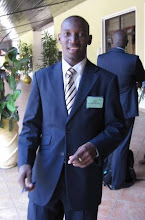
Govt is using gay issue to fight NGOs – Ssewanyana
WRITTEN BY PATIENCE AKUMU
Foundation for Human Rights Initiative (FHRI) is one of the NGOs that now face a threat of closure after Ethics and Integrity Minister Rev Simon Lokodo accused them of promoting homosexuality.
PATIENCE AKUMU spoke to FHRI executive director, LIVINGSTONE SSEWANYANA, on why NGOs cannot stay away from gay rights. Ssewanyana maps the way forward for ‘blacklisted’ NGOs and explains why he believes this is more than a fight against homosexuality.
Are FHRI and other NGOs that Minister Lokodo named promoting homosexuality?
We are involved in minority rights issues. We are saying that all minorities, including homosexuals, deserve respect. Uganda has an obligation to preserve the rights of every citizen. The Constitution prohibits discrimination on all grounds — as does the International Covenant on Civil and Political rights (ICPR). Uganda signed the ICPR without any reservations. This means that it must respect all its provisions.
Perhaps government is furious because you are recruiting people into homosexuality.
We are not recruiting. We do not actively encourage people to become homosexuals.
But how can you promote a right to what is already illegal under the Penal Code Act?
The Penal code needs a lot of reform. It is our duty [as civil society] to campaign for reform. We are involved in other reforms, like the campaign to restore [presidential] term limits. The law generally needs to be reformed to promote non-discrimination.
The Constitution prohibits same-sex relationships, yet at the same time says that there shall not be discrimination based on colour, race, sex, religion or other factors. Such contradiction requires reform. The Constitution contains other contradictions. For example, it provides for the death penalty under Article 22, and then prohibits torture and inhuman degrading treatment under Article 44. We work to reform several areas of the law.
But for now, the law upholds the death penalty and prohibits homosexuality. Shouldn’t you respect that?
We acknowledge that that is the law, but we are also saying that this law is in conflict with the Constitution. We are saying minorities deserve respect and must be defended. This is different from encouraging people from getting involved in same-sex relationships. Our duty is to defend all rights.
If NGOs are so confident that homosexuals have rights, why haven’t they approached the Constitutional Court to iron out the contradictions and declare criminalising homosexuality unconstitutional?
We cannot do everything at the same time. Currently, we are challenging the death penalty, the offence of terrorism and pushing for electoral reforms. We have to take one step at a time.
Or perhaps you too realise that Uganda is not ready to embrace homosexuals. Is that why there is so much activism, but no NGO has taken this big step?
Right now, most NGOs are focusing on the Anti-Homosexuality bill and seeing that it is not passed. If it is passed, then definitely the only solution will be to go to the Constitutional Court. We cannot challenge a law unless it is passed.
Why don’t you, in the meantime, challenge S.145 of the Penal Code for criminalising homosexuality?
The Penal Code is currently before the Law Reform Commission. They are studying it to see which aspect needs to be reviewed. We think the Penal Code is not a good area for petition right now.
One would think the two High Court decisions upholding the rights of homosexual people would give NGOs more confidence. Are you afraid of Minister Lokodo?
The courts, like us, have looked at it through the perspective of the right not to be discriminated against — not through the homosexuality perspective. The issue of homosexuality was not directly brought before court. NGOs should go ahead and defend rights in spite of political threats. We are ready to challenge [threats] before Parliament, before the citizens and, if need be, before the Constitutional Court.
The Speaker of Parliament, Rebecca Kadaga, has stated that homosexuals will never be accepted in Uganda. With the Anti-Homosexuality bill set to be debated in the House she heads, are you really not fighting a losing battle?
Kadaga, like any other person, is entitled to her views. The Anti-Homosexuality bill needs to come before the House and be debated, and all views and opinions heard. The difficult part would be for her to decide whether she wants to promote discrimination. She has to uphold the Constitution and the ICCPR.
These have non-discrimination clauses. It will do well to remember that Uganda signed the ICCPR without reservations.
Is there a legitimate reason for government to deregister NGOs? Surely, these arguments must hold some water.
I do not think there is a legitimate reason for government to deregister NGOs. The larger issue is whether Ugandans are entitled to freedom of expression, association and assembly. It’s about whether whoever wants to participate in governance issues must be registered. This issue of registration is contested. This is a broader democratic governance issue.
Are you saying this is a general attack on NGOs?
Of course, of course! I do not think it is fair for government to say that because NGOs are involved in advocating for minority rights, they should be closed. NGOs must not be partisan, but they must, by all means, be political — there is nothing in this country that is non-political.
If you want better food, better water, if you are fighting disease; all this is political. Besides, NGOs comprise individual citizens of Uganda. They have a right to monitor how their country is governed.
What place does the people’s culture and religion have in the fight for the rights of minorities?
Culture, religion, morality, values; this is the turning point of the current debate on human rights [not just homosexuals’ rights]. Societies have different value systems and religion has an important role to play. Christianity, for example, does not promote persecution. I don’t know of any religion that does.
African culture promotes tolerance and is welcoming. It is a question of individual attitudes. People have argued that the African child cannot learn unless she or he is caned. Is this true?
The Bible says, “Spare the rod and spoil the child”, but the government has outlawed corporal punishment in schools. Culture and religion preach that a woman has no value, but is this true? We have to interpret culture and religion positively. Besides, the Constitution provides that any culture or religion that contradicts it is void.
At the 1993 Vienna conference on human rights, states embraced the universality of rights. Anyone interpreting rights in the cultural relativist view with the intention of undermining them will not carry the day.
Would you still defend the rights of gay people if your own child was gay?
You know, we faced the same question when campaigning for the abolition of the death penalty. Would I feel differently if it was my own relative murdered? In this struggle for human rights, we should be guided by reason rather than emotion.
If the question of emotion is not left out of the debate, then the entire human rights question will be defeated.
Again, we are not campaigning for homosexuality, but for minority rights. We are not advocating for people to get killed, or for women to become belligerent when we defend their rights; we are only defending human dignity and human rights because the Constitution says so.
Won’t NGOs cower under so much pressure?
NGOs should do the right thing. If they are fighting for rights, then they must defend rights. We must educate people on the issue [homosexuality]. We should realise that some people are short, others tall, and others fat . . . Any government worth its value will respect the rights of all citizens.
The Ugandan government should get its priorities right. Ugandans want better service delivery, better quality life; we need a better economy. Pitted against these, homosexuality is a non-issue. But government is assessing non-issues and using them to deny people their rights. We should now focus on term limits, because their absence is causing political instability.
pakumu@observer.ug

Sunday, July 1, 2012
LGBTI Rights in Uganda: A Call for Global Solidarity
It is no secret that Lesbian, Gay, Bisexual, Transgender and Intersex (LGBTI) Ugandans are discriminated against, threatened with violence, and intimidated by their own government. Too often, though, it is ignored that this is a human rights issue.
Last week my country's Minister of Ethics and Integrity, Fr. Simon Lokodo, said he we would ban 38 organizations because they "promoted homosexuality" and "undermined Ugandan culture." To ban these NGOs would be to deny Ugandans the right to association, which sadly, we've been denied for years. For years, LGBTI and other civil society groups have faced challenges in registering as official organizations because we work on sexual rights.
Lokodo also ordered a raid on a gay rights workshop in Kampala last week -- the second this year. Police officers clad in riot gear surrounded the location and detained 15 participants for questioning. Ironically, our rights to free speech and association were being trampled on while we were training participants on how to document human rights violations. Lokodo justified his actions by invoking the country's sodomy laws. Not only is this ridiculous, but it does not establish a legal basis to deny our human rights. If organizing against laws that violate Uganda's international human rights obligations is illegal as Fr. Lokodo seems to think, I'd like to ask him to comment on the legality of Dr. King's actions to end segregation in America or Bishop Tutu's efforts to end apartheid in South Africa.
It was reported on Wednesday that notes from one of our meetings have been leaked to the government. The notes include strategies on how to promote our human rights and lobby against the proposed Anti-Homosexuality Bill. It is our right to assemble and our right to freely speak about nonviolent ways to protect ourselves against people in our government, like Lokodo, intent on erasing us from society.
But Lokodo spun our efforts to organize and protect our rights as a strategy to promote homosexuality and recruit children. "This is not going to stop. We will support the [Anti-Homosexuality] bill," he threatened. "There is now sufficient evidence to move against these evil people. We'll punish them with a deterrent punishment." It seems Lokodo will use anything to justify his actions, except Uganda law and international human rights standards.
Responding to Lokodo's actions, the Robert F. Kennedy Center for Justice and Human Rights and SMUG released a statement from four Nobel Peace Prize Laureates. The statement calls for the protection of the human rights and recognition of the inherent dignity of LGBTI people around the world. The Nobel Laureates' words are powerful, and the reaction to the statement was inspiring. Within a few days of posting the statement, it was translated into four different languages and reached three continents. If more human rights leaders came forward, perhaps the whole world could hear this message of tolerance and respect.
As these esteemed human rights defenders have supported human rights for LGBTI people in Uganda and worldwide, I hope the support of other leaders will have the same impact. If religious leaders defended our human dignity, how could anyone threaten us with violence? If civic leaders defended our constitutional rights, how could government-sponsored discrimination prevail? If enough citizens spoke up, how long could the government refuse to listen?
Frank Mugisha is the Executive Director of Sexual Minorities Uganda (SMUG) and the 2011 Robert F. Kennedy Human Rights Award Laureate.
Last week my country's Minister of Ethics and Integrity, Fr. Simon Lokodo, said he we would ban 38 organizations because they "promoted homosexuality" and "undermined Ugandan culture." To ban these NGOs would be to deny Ugandans the right to association, which sadly, we've been denied for years. For years, LGBTI and other civil society groups have faced challenges in registering as official organizations because we work on sexual rights.
Lokodo also ordered a raid on a gay rights workshop in Kampala last week -- the second this year. Police officers clad in riot gear surrounded the location and detained 15 participants for questioning. Ironically, our rights to free speech and association were being trampled on while we were training participants on how to document human rights violations. Lokodo justified his actions by invoking the country's sodomy laws. Not only is this ridiculous, but it does not establish a legal basis to deny our human rights. If organizing against laws that violate Uganda's international human rights obligations is illegal as Fr. Lokodo seems to think, I'd like to ask him to comment on the legality of Dr. King's actions to end segregation in America or Bishop Tutu's efforts to end apartheid in South Africa.
It was reported on Wednesday that notes from one of our meetings have been leaked to the government. The notes include strategies on how to promote our human rights and lobby against the proposed Anti-Homosexuality Bill. It is our right to assemble and our right to freely speak about nonviolent ways to protect ourselves against people in our government, like Lokodo, intent on erasing us from society.
But Lokodo spun our efforts to organize and protect our rights as a strategy to promote homosexuality and recruit children. "This is not going to stop. We will support the [Anti-Homosexuality] bill," he threatened. "There is now sufficient evidence to move against these evil people. We'll punish them with a deterrent punishment." It seems Lokodo will use anything to justify his actions, except Uganda law and international human rights standards.
Responding to Lokodo's actions, the Robert F. Kennedy Center for Justice and Human Rights and SMUG released a statement from four Nobel Peace Prize Laureates. The statement calls for the protection of the human rights and recognition of the inherent dignity of LGBTI people around the world. The Nobel Laureates' words are powerful, and the reaction to the statement was inspiring. Within a few days of posting the statement, it was translated into four different languages and reached three continents. If more human rights leaders came forward, perhaps the whole world could hear this message of tolerance and respect.
As these esteemed human rights defenders have supported human rights for LGBTI people in Uganda and worldwide, I hope the support of other leaders will have the same impact. If religious leaders defended our human dignity, how could anyone threaten us with violence? If civic leaders defended our constitutional rights, how could government-sponsored discrimination prevail? If enough citizens spoke up, how long could the government refuse to listen?
Frank Mugisha is the Executive Director of Sexual Minorities Uganda (SMUG) and the 2011 Robert F. Kennedy Human Rights Award Laureate.
Uganda to de-register “gay” supporting organisations and others
June 19, 2012 By Angelo Izama in The Ugandan Reader
Fr. Simon Lokodo, the boisterous catholic priest who serves as the Minister for Ethics and Integrity yesterday told me, Charles Mwanguhya and Bernard Tabaire that he had finalised arrangements to de-register some 38 NGO’s in Uganda. ” They will be de-registered for supporting homosexuality under the guise of fighting for human rights” he said.
The Minister was a guest of the Hot Seat on 933 KFM in what was a rather disturbing show yesterday. He had come to explain why his ministry was focussing on breaking up “gay promotion” meetings. Amongst other things he when I asked him why he was not as outspoken about the perils of child trafficking, child sex abuse or even the plight of men in Uganda’s prison system where non-consensual sex and congestion is pushing up HIV numbers he retorted that he embraced prostitution because it was a lesser evil. I also asked him what he thought of the idea of a military police mooted by the head of the Uganda Police Force since it would mean the force would be soldiers in uniform? His response off air was that the government was being provoked.
There is something of moral flux in Uganda these days. Political leaders have drawn the battle lines over the “involvement” of the Church in politics even as religious leaders seek to impose not just political solutions ( they want a restoration of constitutional term limits etc) but recently suggested lawmakers revisit Uganda’s controversial “anti-gay” legislation. This even as news reports are filled daily with what are likely systemic cases of violence, criminal behavior that those with an eye for these things including Fr. Lokodo may to review as a national conversation about common values.
Still the Minister had a unique angle on that too. He said mushrooming evangelical churches would also be “de-registered”. Unlike traditional churches he said they only entertained. False prophesy maybe.
Ugandan NGO’s are facing a tough stretch. The Internal Affairs Minister who Lokodo said had worked with him on the list of NGO’s whose operating license would be withdrawn has been battling with UK’s Oxfam and the Uganda Land Alliance following the publication by the two of a report on alleged land grabbing. The full list of 38 NGO’s likely includes two organisations I know well, the Advocates Coalition for Development and Environment and the Uganda Human Rights Network [HURINET]. Lokodo confirmed HURINET was on the list. ”Oxfam will survive for now” he said but added that Uganda Land Alliance was on its way out.
News reports will likely carry these stories in the next couple of days but it appears that the ante is up on NGO’s. I did several interviews over the last weeks about the situation. What appears clear is that the community of NGO’s has no common response. Perhaps until the rhetoric turns into action and licenses are torn up like yesterday’s newspapers.
Fr. Simon Lokodo, the boisterous catholic priest who serves as the Minister for Ethics and Integrity yesterday told me, Charles Mwanguhya and Bernard Tabaire that he had finalised arrangements to de-register some 38 NGO’s in Uganda. ” They will be de-registered for supporting homosexuality under the guise of fighting for human rights” he said.
The Minister was a guest of the Hot Seat on 933 KFM in what was a rather disturbing show yesterday. He had come to explain why his ministry was focussing on breaking up “gay promotion” meetings. Amongst other things he when I asked him why he was not as outspoken about the perils of child trafficking, child sex abuse or even the plight of men in Uganda’s prison system where non-consensual sex and congestion is pushing up HIV numbers he retorted that he embraced prostitution because it was a lesser evil. I also asked him what he thought of the idea of a military police mooted by the head of the Uganda Police Force since it would mean the force would be soldiers in uniform? His response off air was that the government was being provoked.
There is something of moral flux in Uganda these days. Political leaders have drawn the battle lines over the “involvement” of the Church in politics even as religious leaders seek to impose not just political solutions ( they want a restoration of constitutional term limits etc) but recently suggested lawmakers revisit Uganda’s controversial “anti-gay” legislation. This even as news reports are filled daily with what are likely systemic cases of violence, criminal behavior that those with an eye for these things including Fr. Lokodo may to review as a national conversation about common values.
Still the Minister had a unique angle on that too. He said mushrooming evangelical churches would also be “de-registered”. Unlike traditional churches he said they only entertained. False prophesy maybe.
Ugandan NGO’s are facing a tough stretch. The Internal Affairs Minister who Lokodo said had worked with him on the list of NGO’s whose operating license would be withdrawn has been battling with UK’s Oxfam and the Uganda Land Alliance following the publication by the two of a report on alleged land grabbing. The full list of 38 NGO’s likely includes two organisations I know well, the Advocates Coalition for Development and Environment and the Uganda Human Rights Network [HURINET]. Lokodo confirmed HURINET was on the list. ”Oxfam will survive for now” he said but added that Uganda Land Alliance was on its way out.
News reports will likely carry these stories in the next couple of days but it appears that the ante is up on NGO’s. I did several interviews over the last weeks about the situation. What appears clear is that the community of NGO’s has no common response. Perhaps until the rhetoric turns into action and licenses are torn up like yesterday’s newspapers.
UN chief Ban Ki-moon says gay activists are his 'inspiration'
UN Secretary General Ban Ki-moon hails 'brave' gay activists, says anti-gay abuse is a human rights violation and insists countries have a legal and moral duty to deal with it, whatever their culture
29 June 2012 | By Demitri Levantis
UN Secretary General Ban Ki-moon has described LGBT activists as ‘brave’, ‘committed’ and an ‘inspiration’ to him.
The comments from the UN leader were read out by assistant secretary general for human rights, Ivan Šimonović, at a screening of gay documentary Call Me Kuchu at the Human Rights Watch Film Festival in New York last night (28 June).
The film covers the struggles faced by the lesbian, gay, bisexual and transgender rights movement in Uganda. It also focuses on the murder of veteran campaigner David Kato.
In the speech Ban Ki-moon said the film showed how gay activists were harassed, threatened and attacked.
'They are treated with a callous cruelty that no human being should have to endure. Yet despite all this, they conduct themselves with calmness, optimism and dignity. It is truly remarkable,' he said.
He stated that violence and discrimination against gay and trans people violates human rights and that countries have a moral and legal duty to do something about it.
Ki-moon continued: 'At the end of last year, the High Commissioner for Human Rights published the first official United Nations report on the problem. In all regions of the world, LGBT people suffer discrimination — at work, at home, at school, in all aspects of daily life. Too often they have trouble in finding housing or obtaining basic healthcare and pension benefits. Too often they are subjected to verbal abuse or singled out for attack, torture and even murder. In 76 countries, having a partner of the same sex is a prosecutable crime. People are arrested, imprisoned, in some cases executed, just because they are in a loving relationship.
'This is an affront to the principles on which the United Nations was founded: equality, freedom, tolerance and the inherent dignity of each individual.'
French activists, including the International Day Against Homophobia founder Louis-Georges Tin, are currently on hunger strike, demading their president, François Holland sponsors a resolution in the UN calling for the decriminalization of gay sex around the world.
However, some countries have hit back at attempts to improve the human rights situation for LGBT people, saying homosexuality goes against their cultural traditions.
But for them, Ki-moon had a clear message: 'No custom or tradition, no cultural values or religious beliefs, can justify depriving a human being of his or her human rights.
'That is why, as UN secretary general, I take every opportunity to push leaders to listen and to act. But I am conscious that the hardest work is done by local activists like those you will see in this film.
'To them I want to say: You are an inspiration to me and to millions of people around the world. I am proud to join in this great human rights cause. However hard and however long it may take, I know that justice will prevail and that all people can enjoy the rights and dignity they deserve.'
Tears of sympathy were shed and a long ovation followed the screening. Directors of Call Me Kuchu, Malika Zouhall-Worrall and Katherine Fairfax Wright attended the festival.
Call Me Kuchu won the Teddy Award for Best Documentary at the Berlin International Film Festival this year.
29 June 2012 | By Demitri Levantis
UN Secretary General Ban Ki-moon has described LGBT activists as ‘brave’, ‘committed’ and an ‘inspiration’ to him.
The comments from the UN leader were read out by assistant secretary general for human rights, Ivan Šimonović, at a screening of gay documentary Call Me Kuchu at the Human Rights Watch Film Festival in New York last night (28 June).
The film covers the struggles faced by the lesbian, gay, bisexual and transgender rights movement in Uganda. It also focuses on the murder of veteran campaigner David Kato.
In the speech Ban Ki-moon said the film showed how gay activists were harassed, threatened and attacked.
'They are treated with a callous cruelty that no human being should have to endure. Yet despite all this, they conduct themselves with calmness, optimism and dignity. It is truly remarkable,' he said.
He stated that violence and discrimination against gay and trans people violates human rights and that countries have a moral and legal duty to do something about it.
Ki-moon continued: 'At the end of last year, the High Commissioner for Human Rights published the first official United Nations report on the problem. In all regions of the world, LGBT people suffer discrimination — at work, at home, at school, in all aspects of daily life. Too often they have trouble in finding housing or obtaining basic healthcare and pension benefits. Too often they are subjected to verbal abuse or singled out for attack, torture and even murder. In 76 countries, having a partner of the same sex is a prosecutable crime. People are arrested, imprisoned, in some cases executed, just because they are in a loving relationship.
'This is an affront to the principles on which the United Nations was founded: equality, freedom, tolerance and the inherent dignity of each individual.'
French activists, including the International Day Against Homophobia founder Louis-Georges Tin, are currently on hunger strike, demading their president, François Holland sponsors a resolution in the UN calling for the decriminalization of gay sex around the world.
However, some countries have hit back at attempts to improve the human rights situation for LGBT people, saying homosexuality goes against their cultural traditions.
But for them, Ki-moon had a clear message: 'No custom or tradition, no cultural values or religious beliefs, can justify depriving a human being of his or her human rights.
'That is why, as UN secretary general, I take every opportunity to push leaders to listen and to act. But I am conscious that the hardest work is done by local activists like those you will see in this film.
'To them I want to say: You are an inspiration to me and to millions of people around the world. I am proud to join in this great human rights cause. However hard and however long it may take, I know that justice will prevail and that all people can enjoy the rights and dignity they deserve.'
Tears of sympathy were shed and a long ovation followed the screening. Directors of Call Me Kuchu, Malika Zouhall-Worrall and Katherine Fairfax Wright attended the festival.
Call Me Kuchu won the Teddy Award for Best Documentary at the Berlin International Film Festival this year.
Wednesday, June 27, 2012
Uganda: Space for Civil Society Shrinking in Uganda Say National and Global CSOS
Johannesburg, 25 June 2012 — Civil society space in Uganda is rapidly shrinking, warn global network CIVICUS: World Alliance for Citizen Participation and Uganda-based East and Horn of Africa Human Rights Defenders Project (EHAHRDP). Independent civil society organisations are being openly threatened and placed under excessive scrutiny by senior government officials.
For example, on 18 June, a skills-building workshop for LGBTI human rights defenders organised by EHAHRDP was closed abruptly after police raided the training venue. Workshop participants, and guests and staff in the hotel where the meeting was taking place were effectively held hostage for over three hours while police attempted to identify and detain participants. Two EHAHRDP staff members and two workshop participants were also detained on a police bus. The police advised EHAHRDP to end the training and to deliver a copy of their registration and incorporation documents to the Criminal Investigations Department.
EHAHRDP was further advised to seek approval from police institutions when such gatherings are scheduled in future in order to avoid more disruption. Local journalists arrived before the police and said that they had received a tip-off of the action from the Minister of State for Ethics and Integrity, Hon. Rev. Fr. Simon Lokodo.
Coming just four months after the Minister of State for Ethics and Integrity shut down another capacity building workshop organised by LGBTI activists in February and sought to inspect training materials being used, the interruption of EHAHRDP's workshop highlights a trend of violations of freedom of association and assembly in Uganda. Four of the activists involved in the February events - Jacqueline Kasha Nabagesera, Frank Mugisha, Pepe Julian Onziema and Geoffrey Ogwaro - have filed a suit against the minister and the Attorney General on the grounds that the closure violated their freedom of assembly, as guaranteed under the Ugandan constitution. The case is scheduled to be heard at the High Court on 25 June.
On 1 June, Uganda's Minister for Internal Affairs called for increased regulation and supervision of NGOs in response to a civil society report detailing cases of land grabbing in Uganda. He accused the authors of the report - Uganda Land Alliance and Oxfam - of "peddling lies" and urged NGOs to share their reports with the government before releasing them to the public.
In March, the Governor of the Bank of Uganda wrote to all commercial banks to provide information about the financial transactions of an environmental group, the Advocates Coalition for Development and Environment, which hosted a gathering of over 300 local councillors to discuss governance issues under their National Local Government Councillors Association.
Civil society members are increasingly being accused of being agents of the political opposition or foreign powers out to "destabilise" the government. President Museveni posed a rhetorical question in parliament in February while speaking on Uganda's energy policy: "Who is civil society? These are some individuals in the employ of foreign NGOs." This is rhetoric often employed by governments seeking to restrict their domestic civil society.
"The situation in Uganda is rapidly deteriorating as civil society members are being intimidated in an attempt to stop them airing their views," says Hassan Shire, Executive Director of EHAHRDP. "Respect for freedom of expression, association and assembly are all essential foundations of a democratic and rights-respecting society."
The Ugandan Parliament is currently considering the Public Order Management Bill 2011, which would place a number of restrictions on the freedom of assembly, including the requirement to inform the police seven days in advance of holding public meetings; prohibitions on the use of public address systems without prior police permission; and the prevention of demonstrations near important official buildings. The bill also gives the police broad powers to control public assemblies, empowering them to 'direct' the conduct of public meetings and interfere with demonstrations on vaguely defined grounds. Further, violations of the proposed law carry a disproportionately high penalty of two years' imprisonment.
Current laws governing NGOs in Uganda create a highly restrictive regime, allowing unwarranted interference into NGO activities. NGOs are subjected to excessive bureaucratic control through mandatory registration, which is subject to broad executive discretion.
Additionally, government officials are granted wide-ranging powers to limit the scope of NGO activities. For example, NGOs are required to give seven days' advance notice in writing to local authorities if they intend to make direct contact with people in their area of operation.
"The Ugandan government is showing scant regard for its international obligations," says Netsanet Belay, Policy and Research Director at CIVICUS. "Democratic governments and multilateral institutions, including the UN and the African Union, have a responsibility to highlight this reality to the Ugandan authorities."
CIVICUS and EHAHRDP urge the Ugandan government to cease immediately its campaign of intimidation against civil society and respect the right of civil society actors to freely express, associate and assemble, in line with the country's obligations under the Constitution and the International Covenant on Civil and Political Rights, to which Uganda is a party. They further call on international institutions that engage with the Ugandan government to encourage the government to respect its international commitments fully.
For example, on 18 June, a skills-building workshop for LGBTI human rights defenders organised by EHAHRDP was closed abruptly after police raided the training venue. Workshop participants, and guests and staff in the hotel where the meeting was taking place were effectively held hostage for over three hours while police attempted to identify and detain participants. Two EHAHRDP staff members and two workshop participants were also detained on a police bus. The police advised EHAHRDP to end the training and to deliver a copy of their registration and incorporation documents to the Criminal Investigations Department.
EHAHRDP was further advised to seek approval from police institutions when such gatherings are scheduled in future in order to avoid more disruption. Local journalists arrived before the police and said that they had received a tip-off of the action from the Minister of State for Ethics and Integrity, Hon. Rev. Fr. Simon Lokodo.
Coming just four months after the Minister of State for Ethics and Integrity shut down another capacity building workshop organised by LGBTI activists in February and sought to inspect training materials being used, the interruption of EHAHRDP's workshop highlights a trend of violations of freedom of association and assembly in Uganda. Four of the activists involved in the February events - Jacqueline Kasha Nabagesera, Frank Mugisha, Pepe Julian Onziema and Geoffrey Ogwaro - have filed a suit against the minister and the Attorney General on the grounds that the closure violated their freedom of assembly, as guaranteed under the Ugandan constitution. The case is scheduled to be heard at the High Court on 25 June.
On 1 June, Uganda's Minister for Internal Affairs called for increased regulation and supervision of NGOs in response to a civil society report detailing cases of land grabbing in Uganda. He accused the authors of the report - Uganda Land Alliance and Oxfam - of "peddling lies" and urged NGOs to share their reports with the government before releasing them to the public.
In March, the Governor of the Bank of Uganda wrote to all commercial banks to provide information about the financial transactions of an environmental group, the Advocates Coalition for Development and Environment, which hosted a gathering of over 300 local councillors to discuss governance issues under their National Local Government Councillors Association.
Civil society members are increasingly being accused of being agents of the political opposition or foreign powers out to "destabilise" the government. President Museveni posed a rhetorical question in parliament in February while speaking on Uganda's energy policy: "Who is civil society? These are some individuals in the employ of foreign NGOs." This is rhetoric often employed by governments seeking to restrict their domestic civil society.
"The situation in Uganda is rapidly deteriorating as civil society members are being intimidated in an attempt to stop them airing their views," says Hassan Shire, Executive Director of EHAHRDP. "Respect for freedom of expression, association and assembly are all essential foundations of a democratic and rights-respecting society."
The Ugandan Parliament is currently considering the Public Order Management Bill 2011, which would place a number of restrictions on the freedom of assembly, including the requirement to inform the police seven days in advance of holding public meetings; prohibitions on the use of public address systems without prior police permission; and the prevention of demonstrations near important official buildings. The bill also gives the police broad powers to control public assemblies, empowering them to 'direct' the conduct of public meetings and interfere with demonstrations on vaguely defined grounds. Further, violations of the proposed law carry a disproportionately high penalty of two years' imprisonment.
Current laws governing NGOs in Uganda create a highly restrictive regime, allowing unwarranted interference into NGO activities. NGOs are subjected to excessive bureaucratic control through mandatory registration, which is subject to broad executive discretion.
Additionally, government officials are granted wide-ranging powers to limit the scope of NGO activities. For example, NGOs are required to give seven days' advance notice in writing to local authorities if they intend to make direct contact with people in their area of operation.
"The Ugandan government is showing scant regard for its international obligations," says Netsanet Belay, Policy and Research Director at CIVICUS. "Democratic governments and multilateral institutions, including the UN and the African Union, have a responsibility to highlight this reality to the Ugandan authorities."
CIVICUS and EHAHRDP urge the Ugandan government to cease immediately its campaign of intimidation against civil society and respect the right of civil society actors to freely express, associate and assemble, in line with the country's obligations under the Constitution and the International Covenant on Civil and Political Rights, to which Uganda is a party. They further call on international institutions that engage with the Ugandan government to encourage the government to respect its international commitments fully.
NGOs’ gay plans leak, govt furious
[A Gay hides from the public during one of their recent conferences]
A Gay hides from the public during one of their recent conferences
The government says it has intercepted minutes of a recent meeting that discussed wide-ranging strategies on how to promote the rights of lesbian, gay, bisexual and transgender (LGBT) people in Uganda.
These strategies include how to raise funds and recruit ‘friendly’ journalists into the cause of fighting for homosexual rights in Uganda. Some sources have told The Observer that security operatives infiltrated gay groups and managed to get a document containing minutes of the meeting.
The unsigned document, a copy of which we have seen, names 41 people, from 23 NGOs, as having attended the meeting on May 4, 2012, under the coordination of the Civil Society Coalition on Human Rights and Constitutional Law (CSCHRCL).
The organisations in attendance, we have been told, are among those that the government is threatening to ban because of their LGBT advocacy work. The document shows that this was the 7th such strategy general meeting.
Icebreakers Uganda, which hosted the meeting, is a community-based organisation that supports the rights of LGBT people in the country. The NGOs discussed, among others, “developing a media strategy and strategic arguments against all the sexual bills and for decriminalisation” with a view to “changing opinions and convincing the public”.
This strategy involves “mapping out friendly journalists, as well as hostile and ignorant ones” with the objective of “identifying trainable journalists to become allies and objective reporters on sexual minority and gender identity issues”.
The plan is to raise a list of “40 journalists of a mixture of friendly, hostile and ignorant”. The strategy, whose aim is “gaining acceptance for the sexual minority groups”, with a time frame of June 2012 to June 2013, lists among its activities, workshops, talk-shows, barazas and parliamentary advocacy programmes for legislators.
The plan is to roll out implementation of the strategy through civil society groups spread throughout the country. There is also a well laid-out plan to lobby the national, regional and international community to pile pressure on the Uganda government to abandon the Anti-Homosexuality bill and any other laws hostile to homosexuals.
Lokodo excited
The document has reportedly given Rev Simon Lokodo, the minister in charge of Ethics and Integrity, ammunition to go after gay activists with renewed zeal. Shortly before leaving for an official trip abroad last week, an excited Lokodo, upon seeing the document, said he had finally obtained the information he needed to fight homosexuality in Uganda.
“These people are disruptive; they are promoting a negative culture contrary to the laws of this country. They are promoting homosexuality and lesbianism as an acceptable culture, and this is ruining our lives,” Lokodo said.
He added: “This is not going to stop. We will support the bill. There is now sufficient evidence to move against these evil people. We’ll punish them with a deterrent punishment. We are looking for a day when this law is going to take shape.”
Last Wednesday, Lokodo announced that the government would ban 38 NGOs deemed sympathetic to activities of LGBT people in the country. He said he had passed the list of the NGOs to the Internal Affairs minister to get all of them deregistered, as they were engaging in an illegal activity. Lokodo told journalists that the NGOs were receiving support from abroad and “recruiting” young children into the vice.
“We found that, on the pretext of humanitarian concerns, these organisations are being used to promote negative cultures. They are encouraging homosexuality as if it is the best form of sexual behaviour,” he said.
The previous day, the police had halted a workshop of gay rights activists at Esella country hotel in Najjeera, in the outskirts of Kampala, and briefly detained some participants and staff members of the East and Horn of Africa Human Rights Defenders Project (EHAHRDP), one of the organisers of the event.
Njoroge Njenga, a programme officer with Freedom House, an American NGO, while admitting knowing some of the names of participants at the strategy May 4 meeting, said he was not aware of the specific details of that meeting, because he had only recently arrived in Uganda.
Neil Blazevic, one of the activists detained together with Njenga last Tuesday, is named as participant number 29 on the attendance list of the May 4 NGOs’ meeting at Ice Breakers Uganda.
Gay Bill
Article 31 (2a) of the constitution, as well as provisions of the Ugandan Penal Code Act, prohibit same sex relationships. Two years ago, Ndorwa West MP, David Bahati, moved a private member’s bill, the Anti-Homosexuality Bill 2009, seeking to impose tougher punishment for promotion of, and involvement in, homosexuality.
Although the bill enjoys ample support across Uganda, western governments have piled pressure on Kampala to stop the legislation on human rights grounds. Last week, Bahati, while commenting on the latest campaign against gay activists, said his bill intended “to stop the promotion, recruitment, funding and same sex marriages”.
He insists that Uganda must stand firm and reject attempts by people who want to promote activities of LGBT people, adding that homosexuality is not a human rights issue in Uganda because it is illegal.
When told about the meeting minutes that Lokodo’s people had found, Bahati said: “If it is true that such a document has been [obtained], it serves to strengthen what we have been talking about; that these people are deliberately recruiting followers and promoting their actions, taking advantage of a weak law. We now need to move and strengthen the legal regime and make the punishment more stringent.”
However, organisers of the now controversial meeting are defiant. Jeff Ogwaro, the national coordinator of CSCHRCL, told The Observer yesterday that the NGOs had been meeting monthly for about six months. He, however, denied any wrongdoing.
“I am surprised that government does not know its own laws,” Ogwaro said. “We are promoting human rights, just like those promoting children’s rights… but we don’t have a curriculum that teaches people how to have [gay] sex. Lokodo needs to be educated. He is ignorant.”
List of NGOs facing ban
Civil Society Coalition on Human Rights and Constitutional Law
Refugee Law Project
Rainbow and Diversity Organisation
Angel Support Group
Trans Equality Uganda
Rainbow Foundation Mbarara
newseditor@observer.ug
inShare
Comments
-1 #1 Betty Long Cap 2012-06-27 02:22
The Anti-Homosexuality bill should be re-introduced in Parliament as the anti-sodomy bill. Sodomy is a violent, filthy assault of the rectum and must not be put under the umbrella of human rights.
The militant advocacy group LGBT seeks to destroy the moral fabric of Uganda. Deport reprobates to the west where they can sodomize any consenting adult.
FYI: For decades, homosexuals and lesbians have used the symbol of the rainbow to promote gay pride. Watch for the image of a rainbow oreo cookie.
Quote
0 #2 Mwfrika David 2012-06-27 07:08
This remind me of sometime back when the security operative tried to link the curent DP president was linked to kony as they had a email sent to him by kony seeking his support.
How can the whole minister who is educated say that he has a report which no one signed on it and say its a genuine report, if its true why that that report no person who attended signed and if its a genuine report the auther must sign, please stop taking us for a ride
Quote
0 #3 steven kasiko 2012-06-27 08:46
Gays rights are human rights why make other people suffer because of there chioce let every Ugandan enjoy his freedom
Quote
+1 #4 as 2012-06-27 08:49
kindly you NGOS ,dont bring this kind of behaviour to UG.we have enough problems. Let us not annoy ALLAH ,the Bududah mudslides are enough punishment.
do you really think uganda has enough reconstruction material in case things like hurricanes come her,things like tornados,what about the life that will be affected.i want to tell you such a sin in society goes unpunished from the Almighty GOD
Quote
0 #5 oska 2012-06-27 09:45
Nowhere in the world have i seen society having workshops promoting, campaigning for heterosex. This is wierd!!
if you are sure homosexual behaviour is something natural to do, why spend all that hefty sums promoting & campaigning for it, conscripting young people to the so called natural behaviour???. you would instead let it take root naturally. That shows something is not normal here. Even animals with their small IQ know the right thing but human beings hmnn!!!!
Quote
0 #6 Wats 2012-06-27 09:57
North Carolina (USA) voted to define marriage as relationship between Man and Woman, just a week ago, a wife of Chairman of Republican party member of one state in USA wnet on rampage burning the T-Shirt which was given to her husband by a Gay activist and she went further on to his web site with a barrage of abuses, just as the old say goes, CHARIT BEGINS FROM HOME
why are these gays behaving as if gays activities is acceptable everywhere in USA, such that its only Uganda which is backward?? I DON'T AGREE WITH HOMOSEXUALITY COMPLETELY, UNLESS WE WANT MANKIND TO GET EXTINC.
Quote
0 #7 Wats 2012-06-27 09:59
An the Observer reporter who managed to take the above photo must have been labled a gay sympthizer , friendly and thats why he was allowed in.
Quote
0 #8 kamparaaaaa 2012-06-27 10:22
would we really rather forego the millions of dollars from donar aid funding which helps millions of poor pple just becoz of a few handful ugandan citizens demand gay rights. only pple who will suffer from this lose of aid r poor mothers, children and orphans and not our rich mps and ministers.
Quote
NGOs’ gay plans leak, govt furious
My children, stop fighting – Museveni tells Mbabazi, Kadaga
Govt failed to heed Bududa warning
Sheikh Sentamu murder: police chase 3 leads, remain clueless
MPs demand explanation on Museveni’s attack on Kadaga
Museveni makes new pledges to Busoga
God is sick and tired of us, says Bishop Niringiye
Mbabazi’s daughter pleads with court to spare her from jail
Businessman arrested, deported to South Sudan
One arrested over Sheikh Kiweewa
A Gay hides from the public during one of their recent conferences
The government says it has intercepted minutes of a recent meeting that discussed wide-ranging strategies on how to promote the rights of lesbian, gay, bisexual and transgender (LGBT) people in Uganda.
These strategies include how to raise funds and recruit ‘friendly’ journalists into the cause of fighting for homosexual rights in Uganda. Some sources have told The Observer that security operatives infiltrated gay groups and managed to get a document containing minutes of the meeting.
The unsigned document, a copy of which we have seen, names 41 people, from 23 NGOs, as having attended the meeting on May 4, 2012, under the coordination of the Civil Society Coalition on Human Rights and Constitutional Law (CSCHRCL).
The organisations in attendance, we have been told, are among those that the government is threatening to ban because of their LGBT advocacy work. The document shows that this was the 7th such strategy general meeting.
Icebreakers Uganda, which hosted the meeting, is a community-based organisation that supports the rights of LGBT people in the country. The NGOs discussed, among others, “developing a media strategy and strategic arguments against all the sexual bills and for decriminalisation” with a view to “changing opinions and convincing the public”.
This strategy involves “mapping out friendly journalists, as well as hostile and ignorant ones” with the objective of “identifying trainable journalists to become allies and objective reporters on sexual minority and gender identity issues”.
The plan is to raise a list of “40 journalists of a mixture of friendly, hostile and ignorant”. The strategy, whose aim is “gaining acceptance for the sexual minority groups”, with a time frame of June 2012 to June 2013, lists among its activities, workshops, talk-shows, barazas and parliamentary advocacy programmes for legislators.
The plan is to roll out implementation of the strategy through civil society groups spread throughout the country. There is also a well laid-out plan to lobby the national, regional and international community to pile pressure on the Uganda government to abandon the Anti-Homosexuality bill and any other laws hostile to homosexuals.
Lokodo excited
The document has reportedly given Rev Simon Lokodo, the minister in charge of Ethics and Integrity, ammunition to go after gay activists with renewed zeal. Shortly before leaving for an official trip abroad last week, an excited Lokodo, upon seeing the document, said he had finally obtained the information he needed to fight homosexuality in Uganda.
“These people are disruptive; they are promoting a negative culture contrary to the laws of this country. They are promoting homosexuality and lesbianism as an acceptable culture, and this is ruining our lives,” Lokodo said.
He added: “This is not going to stop. We will support the bill. There is now sufficient evidence to move against these evil people. We’ll punish them with a deterrent punishment. We are looking for a day when this law is going to take shape.”
Last Wednesday, Lokodo announced that the government would ban 38 NGOs deemed sympathetic to activities of LGBT people in the country. He said he had passed the list of the NGOs to the Internal Affairs minister to get all of them deregistered, as they were engaging in an illegal activity. Lokodo told journalists that the NGOs were receiving support from abroad and “recruiting” young children into the vice.
“We found that, on the pretext of humanitarian concerns, these organisations are being used to promote negative cultures. They are encouraging homosexuality as if it is the best form of sexual behaviour,” he said.
The previous day, the police had halted a workshop of gay rights activists at Esella country hotel in Najjeera, in the outskirts of Kampala, and briefly detained some participants and staff members of the East and Horn of Africa Human Rights Defenders Project (EHAHRDP), one of the organisers of the event.
Njoroge Njenga, a programme officer with Freedom House, an American NGO, while admitting knowing some of the names of participants at the strategy May 4 meeting, said he was not aware of the specific details of that meeting, because he had only recently arrived in Uganda.
Neil Blazevic, one of the activists detained together with Njenga last Tuesday, is named as participant number 29 on the attendance list of the May 4 NGOs’ meeting at Ice Breakers Uganda.
Gay Bill
Article 31 (2a) of the constitution, as well as provisions of the Ugandan Penal Code Act, prohibit same sex relationships. Two years ago, Ndorwa West MP, David Bahati, moved a private member’s bill, the Anti-Homosexuality Bill 2009, seeking to impose tougher punishment for promotion of, and involvement in, homosexuality.
Although the bill enjoys ample support across Uganda, western governments have piled pressure on Kampala to stop the legislation on human rights grounds. Last week, Bahati, while commenting on the latest campaign against gay activists, said his bill intended “to stop the promotion, recruitment, funding and same sex marriages”.
He insists that Uganda must stand firm and reject attempts by people who want to promote activities of LGBT people, adding that homosexuality is not a human rights issue in Uganda because it is illegal.
When told about the meeting minutes that Lokodo’s people had found, Bahati said: “If it is true that such a document has been [obtained], it serves to strengthen what we have been talking about; that these people are deliberately recruiting followers and promoting their actions, taking advantage of a weak law. We now need to move and strengthen the legal regime and make the punishment more stringent.”
However, organisers of the now controversial meeting are defiant. Jeff Ogwaro, the national coordinator of CSCHRCL, told The Observer yesterday that the NGOs had been meeting monthly for about six months. He, however, denied any wrongdoing.
“I am surprised that government does not know its own laws,” Ogwaro said. “We are promoting human rights, just like those promoting children’s rights… but we don’t have a curriculum that teaches people how to have [gay] sex. Lokodo needs to be educated. He is ignorant.”
List of NGOs facing ban
Civil Society Coalition on Human Rights and Constitutional Law
Refugee Law Project
Rainbow and Diversity Organisation
Angel Support Group
Trans Equality Uganda
Rainbow Foundation Mbarara
newseditor@observer.ug
inShare
Comments
-1 #1 Betty Long Cap 2012-06-27 02:22
The Anti-Homosexuality bill should be re-introduced in Parliament as the anti-sodomy bill. Sodomy is a violent, filthy assault of the rectum and must not be put under the umbrella of human rights.
The militant advocacy group LGBT seeks to destroy the moral fabric of Uganda. Deport reprobates to the west where they can sodomize any consenting adult.
FYI: For decades, homosexuals and lesbians have used the symbol of the rainbow to promote gay pride. Watch for the image of a rainbow oreo cookie.
Quote
0 #2 Mwfrika David 2012-06-27 07:08
This remind me of sometime back when the security operative tried to link the curent DP president was linked to kony as they had a email sent to him by kony seeking his support.
How can the whole minister who is educated say that he has a report which no one signed on it and say its a genuine report, if its true why that that report no person who attended signed and if its a genuine report the auther must sign, please stop taking us for a ride
Quote
0 #3 steven kasiko 2012-06-27 08:46
Gays rights are human rights why make other people suffer because of there chioce let every Ugandan enjoy his freedom
Quote
+1 #4 as 2012-06-27 08:49
kindly you NGOS ,dont bring this kind of behaviour to UG.we have enough problems. Let us not annoy ALLAH ,the Bududah mudslides are enough punishment.
do you really think uganda has enough reconstruction material in case things like hurricanes come her,things like tornados,what about the life that will be affected.i want to tell you such a sin in society goes unpunished from the Almighty GOD
Quote
0 #5 oska 2012-06-27 09:45
Nowhere in the world have i seen society having workshops promoting, campaigning for heterosex. This is wierd!!
if you are sure homosexual behaviour is something natural to do, why spend all that hefty sums promoting & campaigning for it, conscripting young people to the so called natural behaviour???. you would instead let it take root naturally. That shows something is not normal here. Even animals with their small IQ know the right thing but human beings hmnn!!!!
Quote
0 #6 Wats 2012-06-27 09:57
North Carolina (USA) voted to define marriage as relationship between Man and Woman, just a week ago, a wife of Chairman of Republican party member of one state in USA wnet on rampage burning the T-Shirt which was given to her husband by a Gay activist and she went further on to his web site with a barrage of abuses, just as the old say goes, CHARIT BEGINS FROM HOME
why are these gays behaving as if gays activities is acceptable everywhere in USA, such that its only Uganda which is backward?? I DON'T AGREE WITH HOMOSEXUALITY COMPLETELY, UNLESS WE WANT MANKIND TO GET EXTINC.
Quote
0 #7 Wats 2012-06-27 09:59
An the Observer reporter who managed to take the above photo must have been labled a gay sympthizer , friendly and thats why he was allowed in.
Quote
0 #8 kamparaaaaa 2012-06-27 10:22
would we really rather forego the millions of dollars from donar aid funding which helps millions of poor pple just becoz of a few handful ugandan citizens demand gay rights. only pple who will suffer from this lose of aid r poor mothers, children and orphans and not our rich mps and ministers.
Quote
NGOs’ gay plans leak, govt furious
My children, stop fighting – Museveni tells Mbabazi, Kadaga
Govt failed to heed Bududa warning
Sheikh Sentamu murder: police chase 3 leads, remain clueless
MPs demand explanation on Museveni’s attack on Kadaga
Museveni makes new pledges to Busoga
God is sick and tired of us, says Bishop Niringiye
Mbabazi’s daughter pleads with court to spare her from jail
Businessman arrested, deported to South Sudan
One arrested over Sheikh Kiweewa
Monday, June 18, 2012
Alert: Police Interrupt EHAHRDP Workshop; Question Workshop Participants and Organisers in Kampala
A training workshop for human rights defenders organized by the East and Horn of Africa Human Rights Defenders Project has been interrupted by uninvited media representatives and the police. Participants are currently being questioned by the police.
EHAHRDP organized the training working on monitoring, documentation and reporting of human rights violations for LGBTI defenders, which opened this morning at Esella Country Hotel, Najjera, Kampala. The workshop organisers, which brought together twenty HRDs from Uganda, Rwanda, Tanzania and Kenya, as well as seven EHAHRDP staff members and interns, stopped the meeting when they learned that the media was coming to the hotel. Around ten journalists arrived at approximately 2.30pm, and two or three cameras were used to film the event. EHAHRDP has not been able to establish who informed the media that the training was taking place, although some of the journalists claimed to have received the information via the Minister of Ethics and Integrity, Rev. Simon Lokodo.
Soon afterwards, the police arrived and began to question participants. Led by the head of the Kampala Metropolitan Criminal Investigations Department, the police began by questioning Paul Njogore from Freedom House, Jane Wothaya Thirikwa from Gay Kenya Trust, Neil Blazevic (a Canadian citizen) and Tabitha Netuwa from EHAHRDP, who were then held for some time in a police van and were told they would be taken to the Kira Road police station. The police are currently questioning all participants one-by-one, including by forcibly entering their hotel rooms.
EHAHRDP calls on the Ugandan police to immediately release all participants, and condemns this unjustified interruption of our legitimate activities.
For more information, please contact:
Hassan Shire, Executive Director on executive@defenddefenders.org or +41 793 375 875
Rachel Nicholson, Advocacy Officer on advocacy@defenddefenders.org or +41 762 556 769
EHAHRDP organized the training working on monitoring, documentation and reporting of human rights violations for LGBTI defenders, which opened this morning at Esella Country Hotel, Najjera, Kampala. The workshop organisers, which brought together twenty HRDs from Uganda, Rwanda, Tanzania and Kenya, as well as seven EHAHRDP staff members and interns, stopped the meeting when they learned that the media was coming to the hotel. Around ten journalists arrived at approximately 2.30pm, and two or three cameras were used to film the event. EHAHRDP has not been able to establish who informed the media that the training was taking place, although some of the journalists claimed to have received the information via the Minister of Ethics and Integrity, Rev. Simon Lokodo.
Soon afterwards, the police arrived and began to question participants. Led by the head of the Kampala Metropolitan Criminal Investigations Department, the police began by questioning Paul Njogore from Freedom House, Jane Wothaya Thirikwa from Gay Kenya Trust, Neil Blazevic (a Canadian citizen) and Tabitha Netuwa from EHAHRDP, who were then held for some time in a police van and were told they would be taken to the Kira Road police station. The police are currently questioning all participants one-by-one, including by forcibly entering their hotel rooms.
EHAHRDP calls on the Ugandan police to immediately release all participants, and condemns this unjustified interruption of our legitimate activities.
For more information, please contact:
Hassan Shire, Executive Director on executive@defenddefenders.org or +41 793 375 875
Rachel Nicholson, Advocacy Officer on advocacy@defenddefenders.org or +41 762 556 769
Subscribe to:
Posts (Atom)

 Posts
Posts